

The Story & Details
Some wounds don't bleed. That doesn't mean they don't leave a mark.
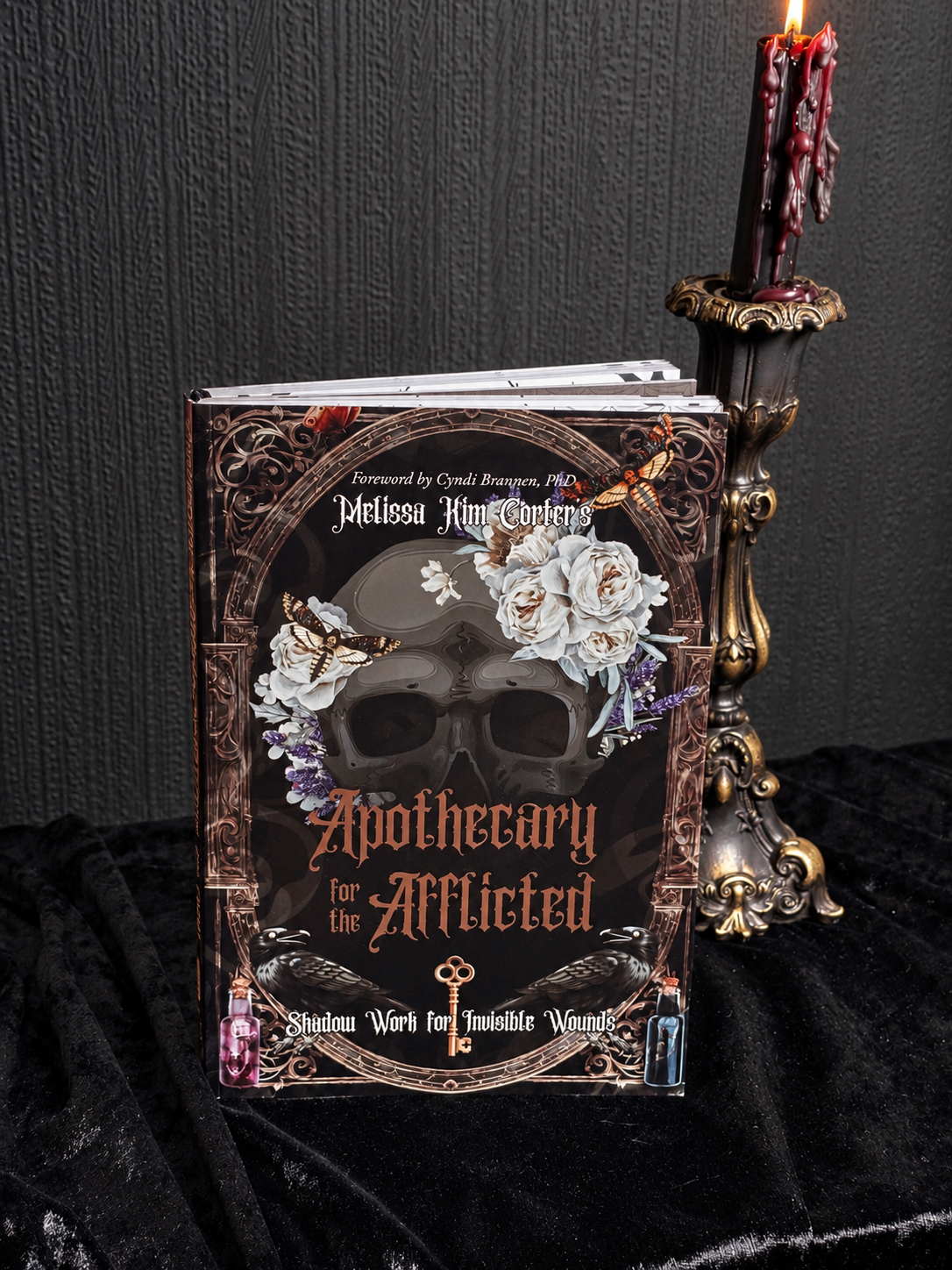
Apothecary for the Afflicted: Shadow Work for Invisible Wounds by Melissa Kim Corter explores the parts of ourselves that are often easier to avoid than understand.
Drawing on Jungian ideas about the shadow, psychological reflection, symbolism and the darker themes found within fairy tales, this book examines the emotions, patterns and experiences that can sit beneath our everyday thoughts and behaviours.
This isn't another invitation to simply embrace your darkness and call the work finished. It's about asking questions, recognising recurring patterns, exploring uncomfortable emotions and developing a more thoughtful understanding of the things we carry.
Blending psychological concepts with symbolic and spiritual approaches to shadow work, Corter offers readers a framework for exploring their inner world through reflection and practical exercises.
And visually, it could hardly be more at home in the Asylum. Skulls, ravens, death's-head moths, pale roses, apothecary bottles and ornate detailing give the book the appearance of something recovered from a particularly interesting old library.
Inside the Book
- Shadow work and Jungian-inspired psychological concepts
- Exploring recurring emotional and behavioural patterns
- Symbolism, archetypes and darker fairy-tale themes
- Personal reflection and self-exploration
- Practical approaches to examining uncomfortable aspects of the self
Shadow Work Beyond the Aesthetic
In Jungian psychology, the shadow describes aspects of ourselves that may be rejected, hidden or difficult to acknowledge. Exploring these ideas can provide a framework for reflecting on personal patterns, beliefs and emotional responses.
Within contemporary spiritual practice, shadow work often draws on journalling, symbolism and introspection as ways of examining those less comfortable parts of personal experience.
Apothecary for the Afflicted brings these themes together through an approach that embraces complexity rather than insisting that every difficult experience must be transformed into something beautiful.
Because understanding yourself isn't always comfortable. And it doesn't have to look pretty to be worthwhile.
Please note: This book is intended for personal exploration and reflection. Shadow work is not a substitute for professional mental health care, particularly when working through trauma or significant psychological distress.
Part of The Library at Crystal Asylum, where curiosity is encouraged, difficult questions are welcome and nobody is required to pretend that life is all love and light.